BEVS Music Portfolio
Role: Brand Designer, UI Designer, Creative Director
Tools: Figma, Figma Make, Adobe Illustrator, Adobe Photoshop
Tools: Figma, Figma Make, Adobe Illustrator, Adobe Photoshop
View the live prototype here.
Overview
BEVS is my ongoing solo music project, spanning indie rock, electronic, hip-hop, and experimental releases. As my catalog grew, I wanted to create a dedicated digital home that could showcase albums, lyrics, artwork, and project history in a cohesive way.
The project also served as an opportunity to explore AI-assisted design workflows using Figma Make. I designed the experience, established the visual system, and used Figma’s AI prototyping capabilities to transform the concept into an interactive prototype.
*All album artwork featured throughout the experience was created by me. No AI-generated imagery was used in the creation of the album covers.*
The Challenge
Most music websites function primarily as promotional tools, focusing on streaming links and release announcements. I wanted something different—a digital archive that felt intentional, immersive, and personal. The site needed to showcase a growing body of work while remaining flexible enough to accommodate future albums, lyrics, and visual assets.
At the same time, I wanted to challenge myself to learn Figma Make and evaluate where AI could meaningfully contribute to the design process without replacing the work of a designer.
Design Approach
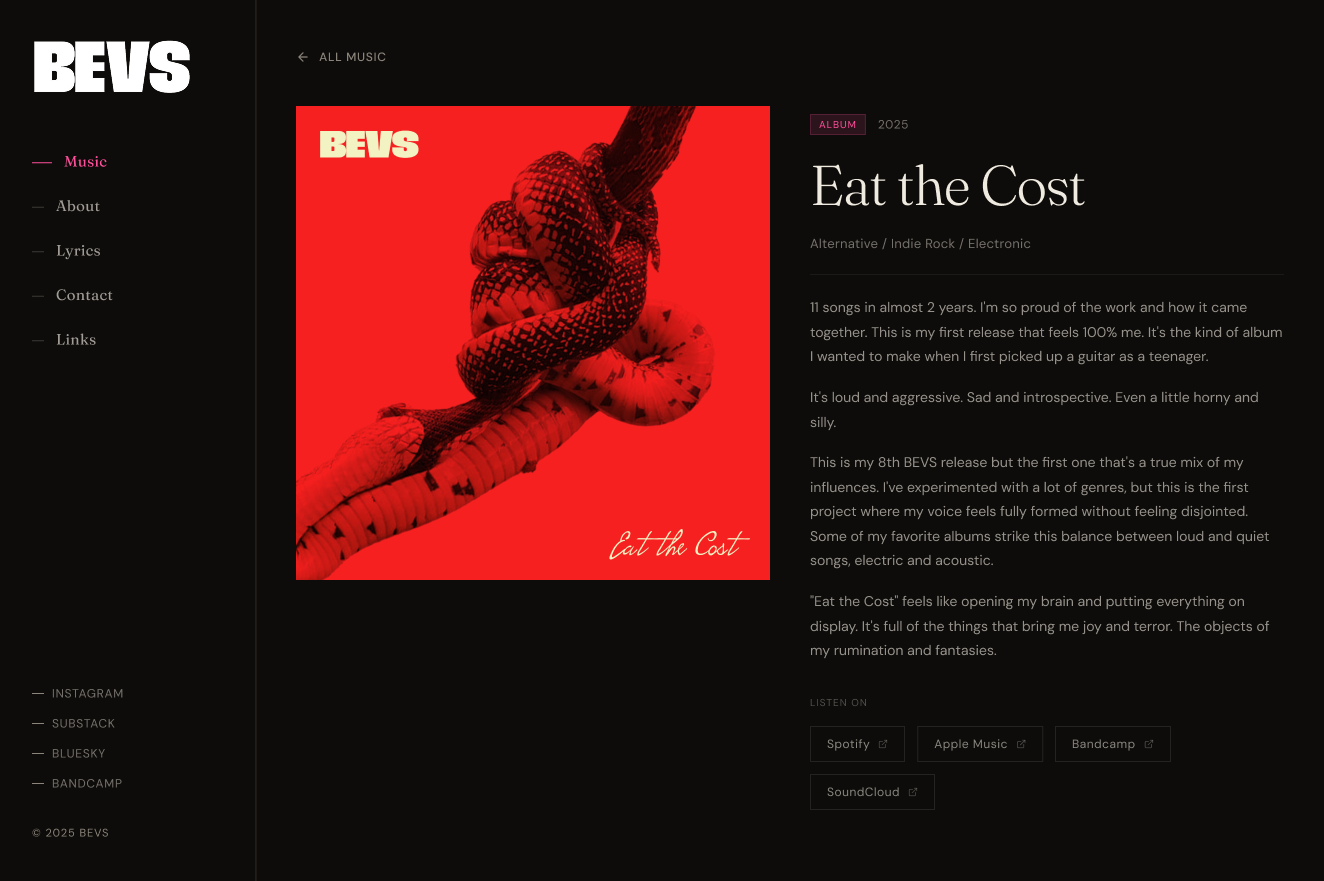
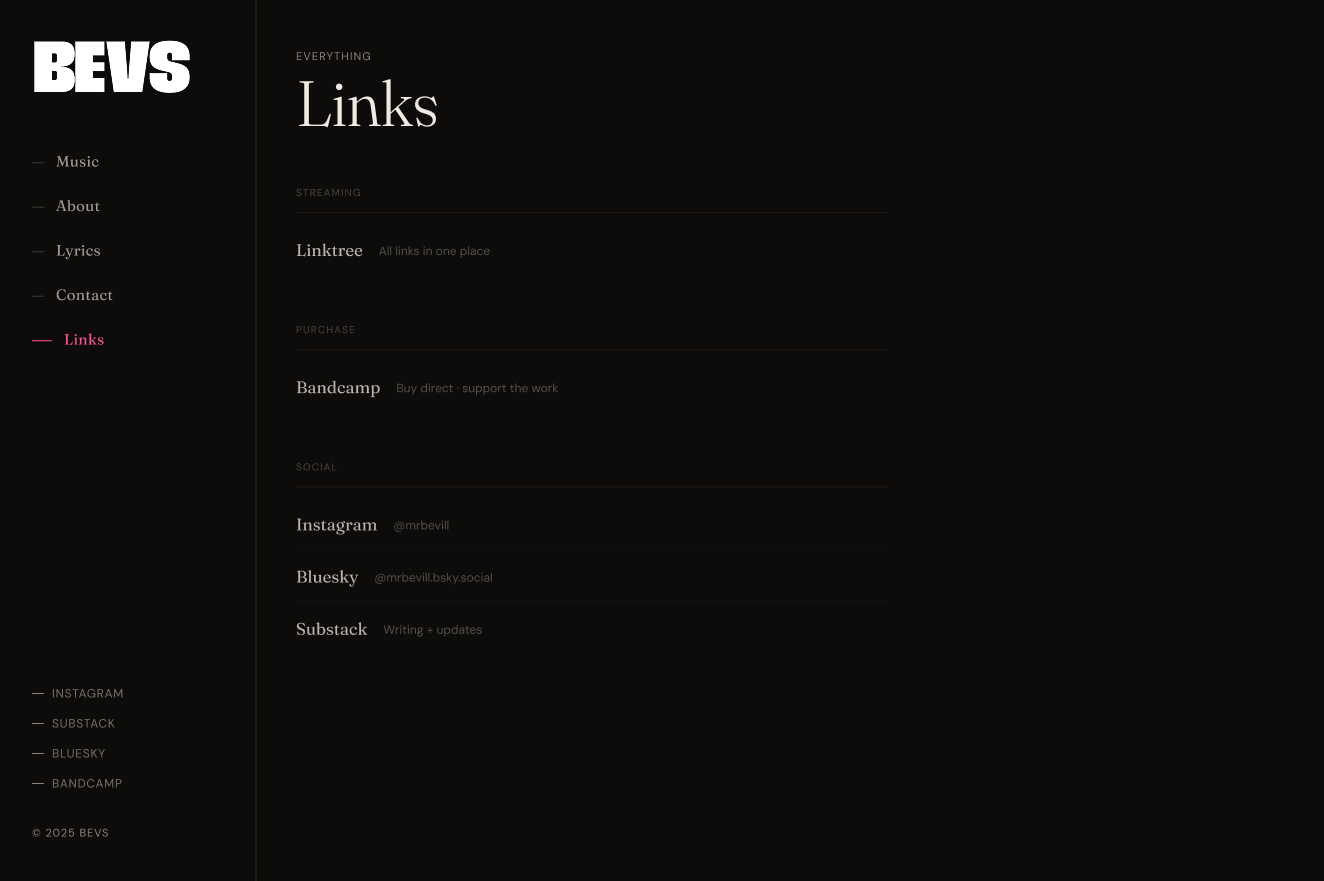
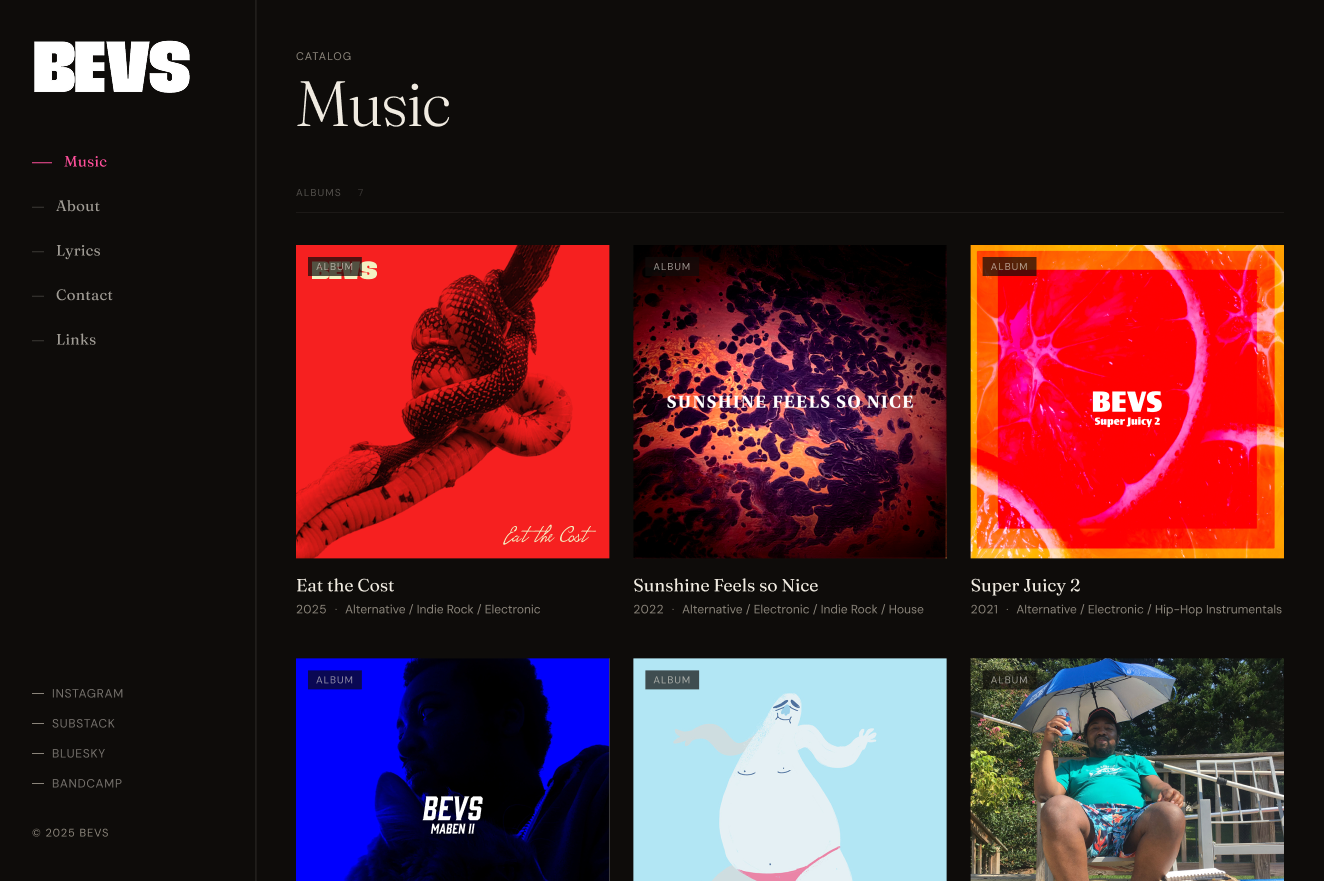
The experience is built around a persistent navigation column paired with a flexible content area. This structure creates a familiar framework that allows visitors to move between albums, lyrics, contact information, and external platforms without losing context.
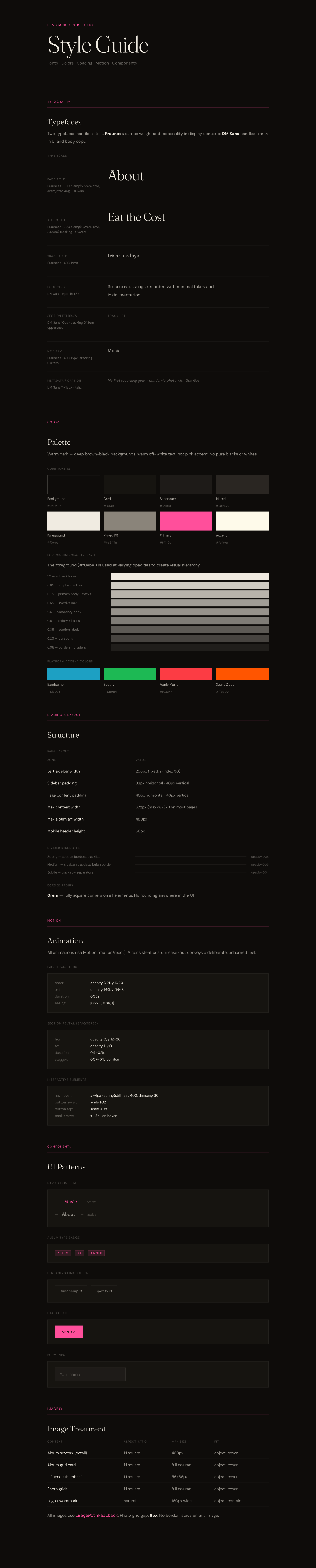
Visually, the interface draws inspiration from editorial layouts and music publications. Large typography, restrained color usage, and generous spacing give the content room to breathe while allowing the artwork to remain the focal point of the experience.
To support long-term scalability, I developed a lightweight design system that defined typography, spacing, color relationships, motion principles, and reusable interface patterns. This foundation allows new releases and content to be added consistently without requiring a redesign.
Experimenting with AI
One of the most valuable aspects of the project was exploring how AI can support modern design workflows. After establishing the visual direction and interaction patterns, I used Figma Make to transform static concepts into an interactive prototype.
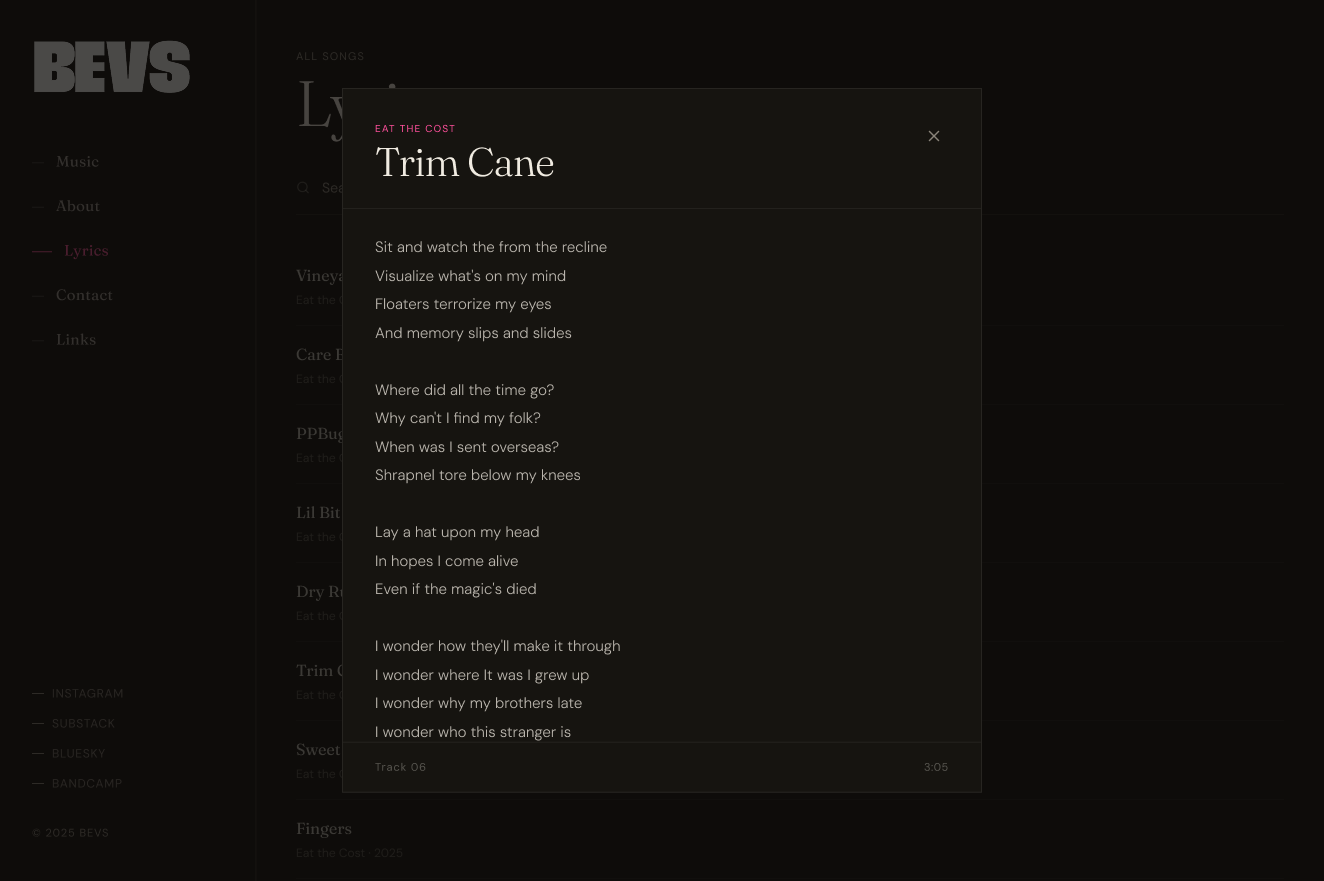
The resulting experience includes album browsing, interactive navigation, lyrics overlays, hover states, and dynamic transitions. The process provided insight into where AI can accelerate implementation while reinforcing that successful experiences still depend on thoughtful design decisions, clear hierarchy, and a strong visual system.
Outcome
The final product serves as both a functioning music portfolio and a design experiment. It provides a centralized home for my music catalog while demonstrating capabilities across brand design, interface design, design systems, and prototyping.
More importantly, the project helped me better understand how AI-powered tools can fit into a designer’s workflow. Rather than replacing creativity, the technology proved most useful as a way to rapidly prototype ideas and test interactions, allowing more time to focus on strategy, storytelling, and visual execution.